 By Casey O’Hara
 From heritage terraces near the Embankment to new-build developments across Wixams and Great Denham, Bedford’s mix of properties needs careful, compliant electrical work that stands the test of time. A skilled electrical contractor does more than fix faults: they design, install, test and maintain systems that keep homes, offices, warehouses, schools and factories running safely and efficiently. Whether you’re planning a consumer unit upgrade, a full rewiring, or modern energy solutions like LED lighting, EV chargers, solar panels and battery storage, choosing local expertise helps ensure the job is completed to the latest standards and tailored to Bedfordshire’s real-world needs.
What a Trusted Electrician in Bedford Delivers for Homes and Businesses
A reputable local electrician provides a start-to-finish service that begins with listening. Every site is different: a Victorian semi in Castle Quarter might need rubber-insulated wiring replaced and an RCD-protected board, while a Kempston industrial unit could require three-phase supplies, emergency lighting and a proactive maintenance plan. The right partner will survey your property, discuss current use and future plans, and then recommend a clear, costed path to safer, more efficient electrics.
Core residential work often starts with safety. A modern consumer unit upgrade with RCD or RCBO protection drastically improves fault response and reduces the risk of electric shock. If your home has outdated cabling, rewiring brings circuits up to the latest wiring regulations, tidies legacy spurs and ring finals, and ensures adequate earthing and bonding. For many Bedford homes, an EICR (Electrical Installation Condition Report) provides a vital health check, identifying defects, wear and non-compliances so you can plan remedial work before it becomes urgent. Add targeted fault finding and repairs, and you have a robust path to safe, reliable power throughout the property.
Commercial and industrial clients require solutions that balance compliance, uptime and operational efficiency. Offices and retail spaces benefit from well-designed lighting, sufficient socket provision, structured circuit layouts and documented testing. Schools, warehouses and factories need dependable emergency lighting, clearly labelled distribution, scheduled RCD testing, and routine inspections that dovetail with site access and production windows. Portable equipment in workplaces must be checked through PAT testing at sensible intervals, helping facilities teams stay audit-ready. When outages do occur, rapid fault finding restores power with minimal disruption.
Local knowledge matters. Bedfordshire’s housing stock spans decades, with varied earthing arrangements, legacy fuse boxes and hidden junctions. Industrial estates around Woburn Road bring their own complexities, from heavier loads to lighting at height. Finding an Electrician in Bedford who can manage both domestic and commercial requirements means you get experience-rich advice, flexible scheduling and documentation that aligns with UK standards and insurance expectations. Above all, you gain confidence that every circuit, from kitchen sockets to manufacturing lines, is designed and maintained for safety and longevity.
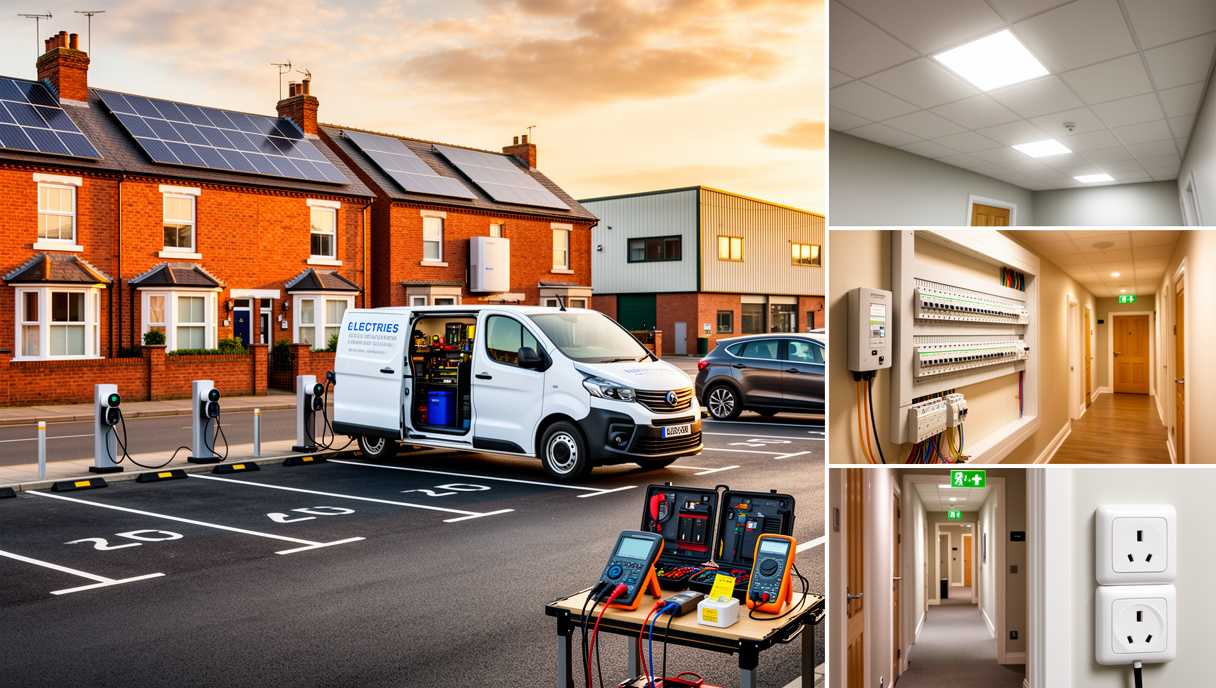
Smarter, Greener Upgrades: LED Lighting, EV Charging, Solar and Storage in Bedfordshire
Modern electrical projects increasingly focus on reducing energy use and improving user experience. Nowhere is this clearer than with LED lighting. For homes, LEDs deliver crisp, flicker-free illumination, wide colour temperature choices and excellent dimming, lowering bills while elevating comfort. In offices, warehouses and schools, well-specified LED panels and high-bay fittings cut energy consumption dramatically, extend maintenance intervals and help spaces feel brighter and safer. Pair lighting with smart controls—sensors, timeclocks and scene setting—and you save even more while tailoring light to the task at hand.
Transport is changing too. Installing EV chargers at home or at the workplace can be straightforward when done correctly. A knowledgeable installer assesses your supply capacity, applies load management where necessary, and chooses charger types that suit real usage (for example, untethered for mixed vehicle types or tethered for daily personal use). In Bedford’s family homes with off-street parking, a single 7 kW unit might suffice. For small fleets or staff parking, multiple points with dynamic load balancing and clear signage keep cars moving without upgrade shock to your incoming supply.
For the best long-term gains, consider on-site generation and storage. Rooftop solar panels paired with battery storage allow households and businesses to capture daytime energy and shift it to evenings, shaving peak tariffs and boosting energy independence. In practice, this might look like a Brickhill semi running daytime loads from solar, storing excess in a battery, and powering an EV overnight using a time-of-use tariff. Commercially, a Bromham or Kempston warehouse with expansive roof space could offset a large portion of its lighting and process loads, especially when paired with occupancy-sensed LEDs and staggered machinery starts.
Real-world results show why these upgrades are popular across Bedfordshire. A terrace retrofit swapping halogens for LED downlights, adding zoned controls and upgrading the consumer unit for RCBO protection, can reduce lighting consumption by up to 70% while improving safety. A logistics unit replacing aging fluorescents with LED high-bays and installing emergency lighting that meets testing standards typically sees rapid payback through lower bills, less downtime for lamp changes and better visibility at height. With careful design, today’s greener choices deliver immediate savings and long-term resilience.
Testing, Inspection and Planned Maintenance: Staying Compliant Year-Round
Effective electrical safety is not a one-off task; it’s a lifecycle of inspection, testing and timely maintenance. The foundation is the EICR, a systematic check of your fixed wiring. For many Bedford homeowners, an EICR every 5 to 10 years (or upon property purchase or major works) provides assurance that circuits remain sound. For landlords in England, periodic inspections are mandatory, typically at least every five years or at change of tenancy, helping ensure tenants live with safe, code-compliant electrics. Commercial and industrial premises usually adopt tighter intervals based on usage, environment and risk assessment.
Complementing fixed wiring checks, PAT testing verifies the safety of portable appliances—from office kettles and extension leads to on-site tools. The frequency should be risk-based: harsher environments or high-traffic areas require more frequent testing than low-risk settings. Documented results matter; they create a defensible record for insurers, auditors and H&S managers, and they help facilities teams prioritise replacements or repairs.
Protective devices also need routine attention. RCD testing confirms that life-saving residual current devices trip quickly under fault conditions. In homes, the test button should be used regularly as recommended by manufacturers, with formal testing incorporated into inspections. In workplaces, integrating RCD checks with scheduled maintenance avoids surprises and supports compliance. Meanwhile, emergency lighting systems in shops, schools and factories must undergo monthly function checks and an annual duration test, ensuring exits remain visible through power cuts or evacuations.
When issues arise, targeted fault finding keeps disruption small and costs contained. Skilled electricians follow a logical diagnosis—verifying protection settings, inspecting suspect circuits, and measuring insulation resistance and continuity—to isolate root causes. Common Bedford findings include aged junction boxes buried under floors, damaged garden cabling feeding outbuildings, or overloaded multiway extensions in improvised office corners. Planned maintenance addresses these weak points before they escalate, often alongside incremental upgrades: adding RCBO protection to nuisance circuits, rebalancing loads across phases, or replacing tired luminaires with efficient LEDs.
Finally, good documentation underpins everything. Clear reports, circuit schedules and test certificates make future work faster and safer, reduce repeat diagnostics, and satisfy insurers or local authority requirements. With a consistent plan—EICR at sensible intervals, risk-based PAT cycles, routine emergency lighting checks, and responsive fault investigation—Bedford homes and businesses can run reliably, meet standards and budget predictably for improvements. Safe systems, efficient technologies and disciplined maintenance together create installations that perform day after day, whatever the site, season or demand.

Sydney marine-life photographer running a studio in Dublin’s docklands. Casey covers coral genetics, Irish craft beer analytics, and Lightroom workflow tips. He kitesurfs in gale-force storms and shoots portraits of dolphins with an underwater drone.